Concrete steps are built in four stages: excavating and compacting a crushed-stone base, setting braced forms with steel reinforcement, pouring and finishing the concrete, and curing it under controlled moisture for at least seven days. In Central Indiana, the base prep matters most. Clay-heavy soil shifts through freeze-thaw cycles, so steps poured on a loose or poorly compacted base crack within a few winters no matter how good the concrete is.
After more than three decades of step work, one pattern holds: the shortcuts that cause problems happen early, during prep and forming, and they don’t show up until the first spring thaw. Mattingly Concrete has been building residential concrete steps across Indianapolis, Carmel, and Fishers since 1987. In this blog post, we share what happens at each of the four stages and why each one depends on the one before it.
Excavation and Base Preparation
Every step project begins with removing old material and establishing a stable base. Demolition crews break out existing steps with hydraulic tools and haul the debris. The area is then excavated to allow for four to six inches of compacted crushed stone, tamped in lifts to create a solid foundation.
In Central Indiana, clay-heavy soils expand and contract through freeze-thaw cycles. A well-compacted aggregate base prevents the settling and cracking that appear when concrete sits on loose or shifting ground. Crews who rush through compaction leave a problem the concrete will reveal within a few winters.
Forming and Reinforcement
Building the Forms
Wooden or metal forms define the shape, height, and rise-to-run ratio of each step. Standard residential steps follow a 7-inch rise and 11-inch run, meeting code while staying comfortable to walk. Forms are braced with stakes and cross-ties to prevent blowouts during the pour. A small alignment error compounds across multiple steps, so experienced crews check level and plumb at every stage.
Adding Steel Reinforcement
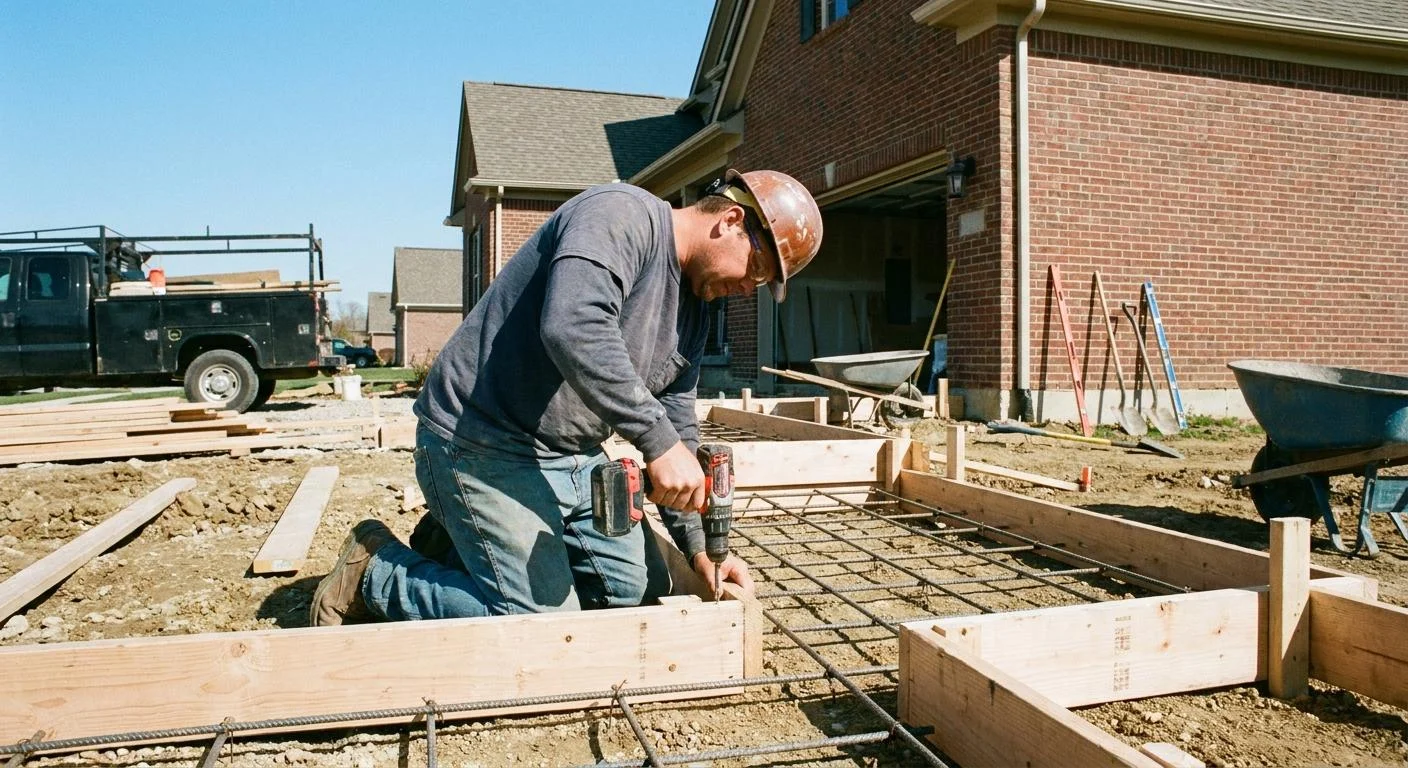
Rebar or welded wire mesh is placed inside the forms before the pour. Steel distributes load across the full set of steps rather than concentrating weight on individual treads. For front entries, #4 rebar (half-inch diameter) in a grid pattern is standard. Reinforcement also limits crack growth during curing. The cost of residential concrete steps runs from $1,000 to $5,000, depending on size, finish, and site conditions.
Pouring and Finishing

Once the forms are braced and reinforced, the final stages involve placing, vibrating, and finishing the concrete to ensure a smooth, durable surface.
The Pour Itself
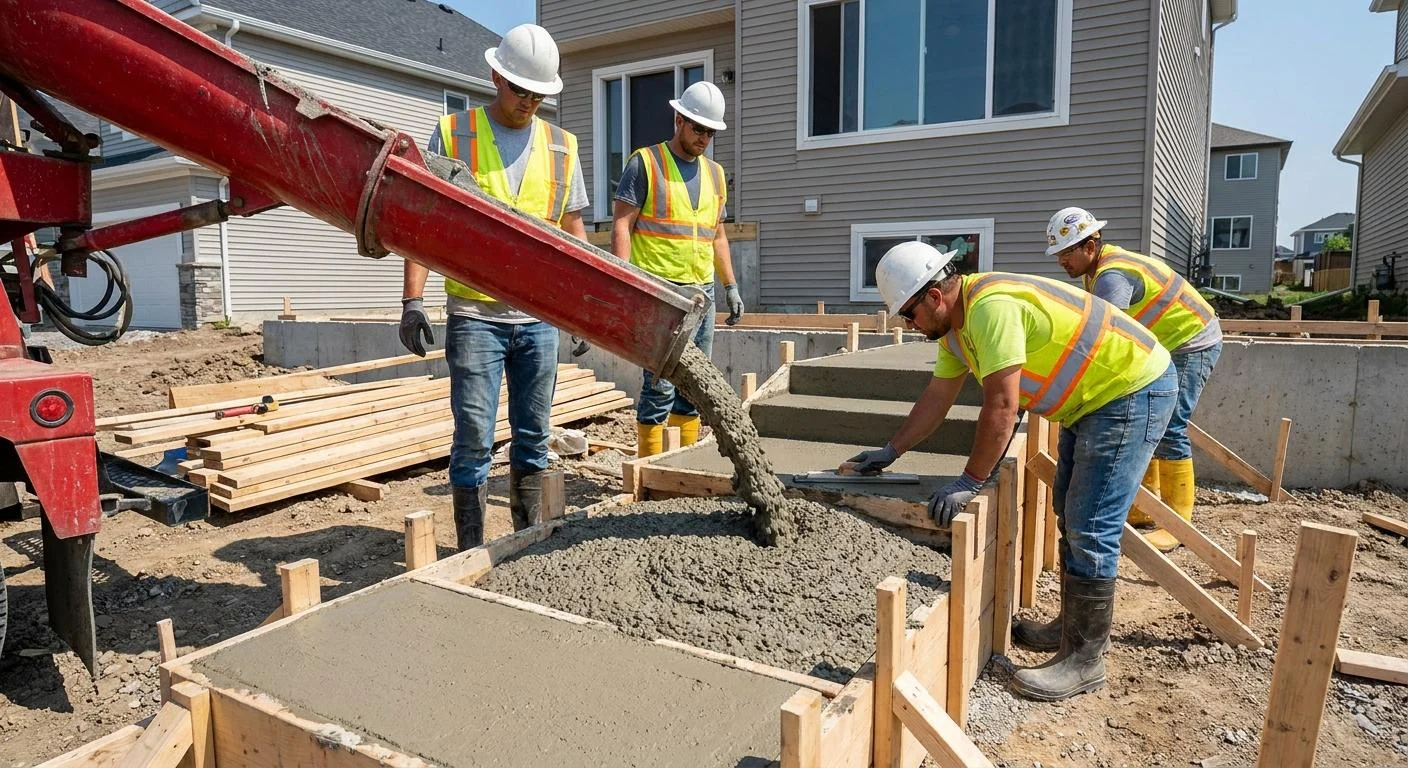
Concrete arrives at a specific slump (consistency) suited for steps, usually around a 4-inch slump. The crew fills each form from the bottom step up, using vibration tools to consolidate the mix and eliminate air pockets. Air voids left inside become weak spots that chip and spall when exposed to moisture and freezing temperatures.
Surface Finishing Options
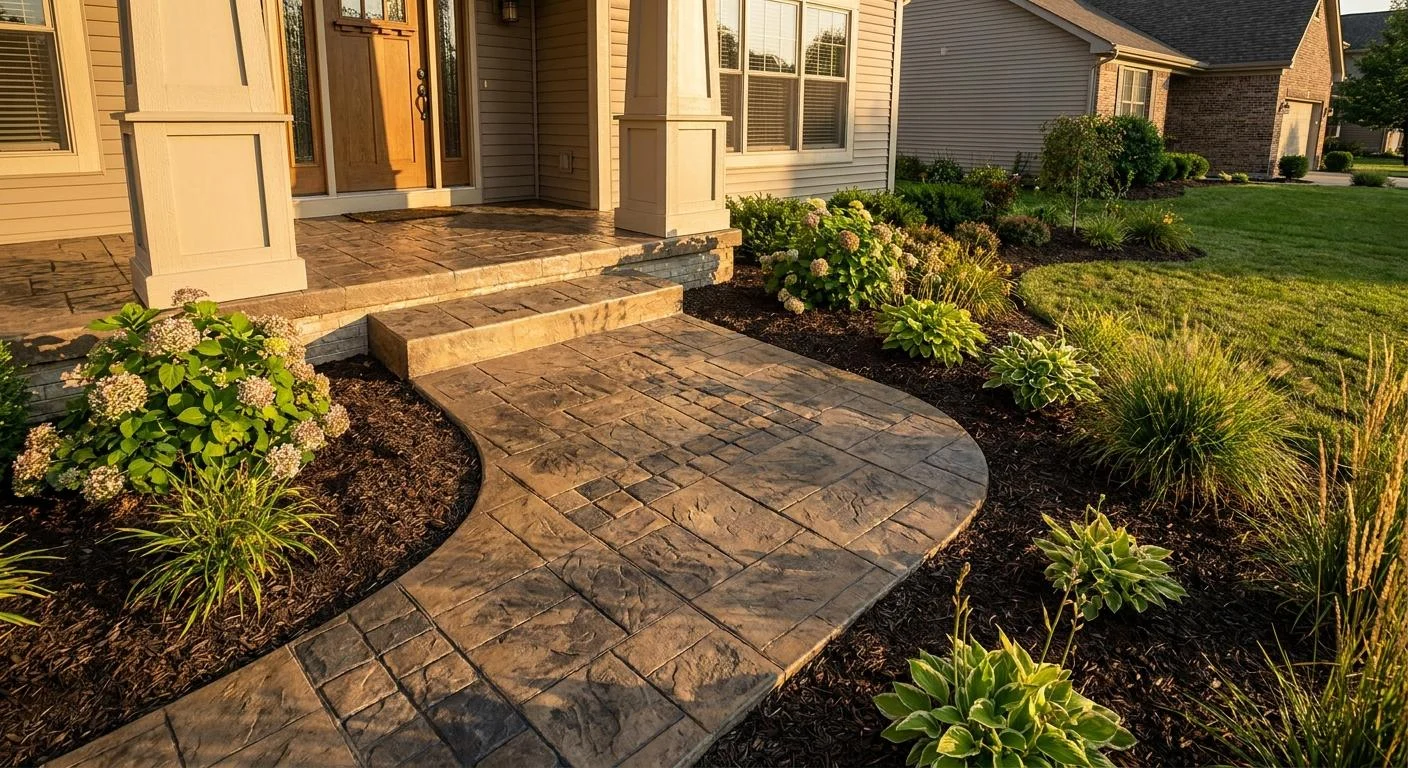
A standard broom finish provides slip resistance and is the most common choice for entry steps. Homeowners who want a more refined look can consider concrete front porch step ideas that replicate stone, brick, or flagstone. Stamped finishes are applied while the surface is still workable, and the crew typically has 30 to 90 minutes before the concrete sets too firm.
Curing and Protection
Curing is the chemical process where concrete gains strength. Freshly poured steps need at least seven days of controlled moisture to reach load-bearing capacity. Crews apply curing compound or cover the surface with wet burlap and plastic to slow moisture loss. Walking on steps before 24 hours or letting the surface dry prematurely leads to scaling and reduced long-term durability.
Mattingly Concrete’s six-step installation process includes a follow-up phase after curing to verify the finished product. A project coordinator checks the completed work and remains available for questions. After 30 days, steps should be sealed with a water-based, low-VOC sealer. Annual resealing is recommended for steps exposed to foot traffic and winter weather.
Frequently Asked Questions
How long does it take to build concrete steps?
Most residential step projects take two to three days from demolition through the pour. Steps should not be walked on for 24 hours, and vehicles should stay off adjacent flatwork for seven full days.
Can concrete steps be repaired instead of replaced?
Minor chips or shallow spalling can sometimes be patched. Structural issues like deep cracks, settling, or rebar corrosion generally require full replacement. Patches on steps rarely match the original finish and tend to debond under constant foot traffic.
Do concrete steps need a permit in Indianapolis?
Replacing steps in the same footprint usually does not require a permit. New construction or changes to the footprint typically do. Mattingly Concrete handles all necessary permitting as part of the project.
Trust the Process to a Pro
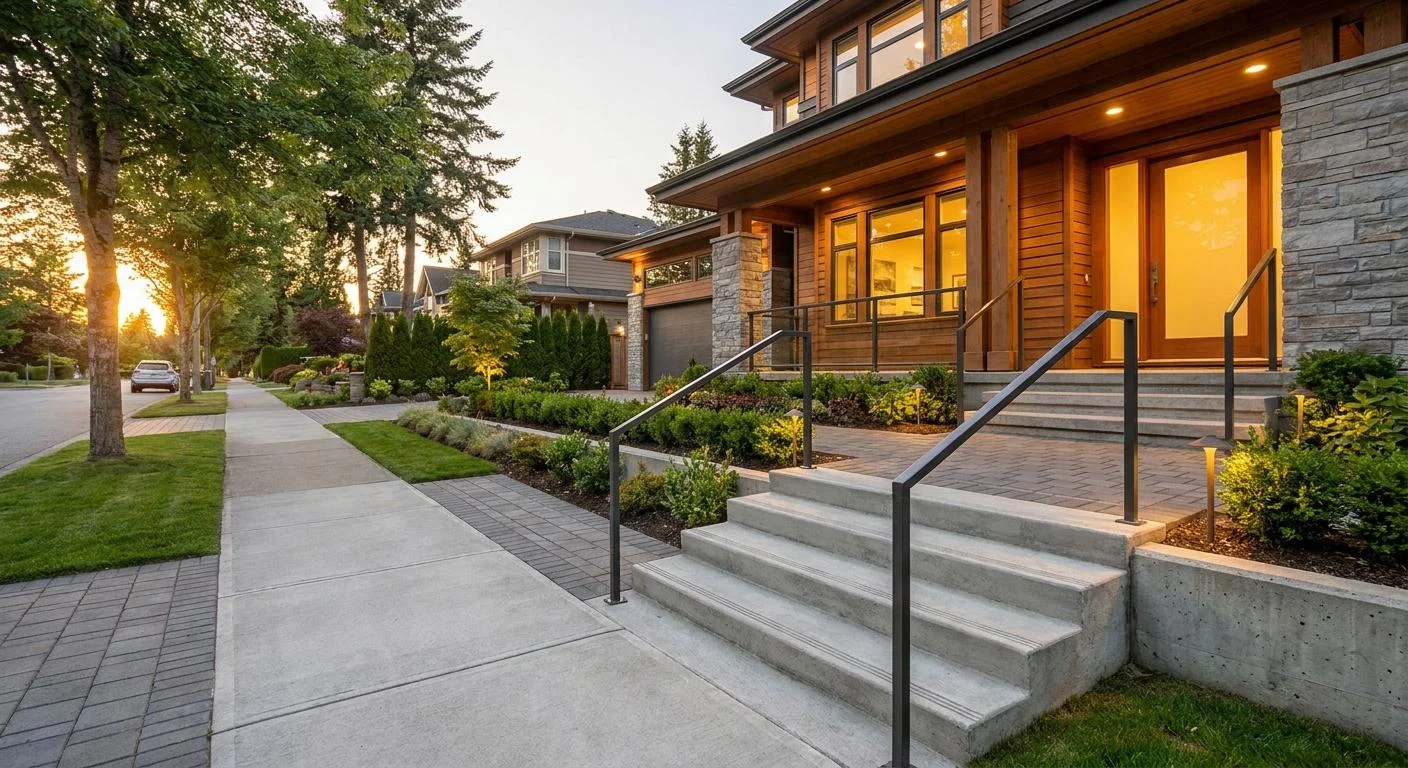
Steps that hold up for decades and steps that crack by spring usually start the same way. The difference is what happened underneath and how patiently it was cured. A solid compacted base, properly set forms, real steel reinforcement, a consolidated pour, and a full week of curing each build on the last. Skip or rush any one, and the freeze-thaw cycle finds the weak point.
That’s why this isn’t a weekend project to gamble on. Mattingly Concrete has been building steps across Central Indiana since 1987, and every job runs through one project coordinator from the first consultation to the follow-up after the concrete cures. Call (317) 867-4049 or request a free estimate online to get started.