Choosing between a concrete patio vs paver patio depends on your budget, maintenance tolerance, and design goals. Poured concrete costs less upfront and requires minimal upkeep, while pavers offer easier individual repairs but higher installation costs and ongoing joint maintenance. As a family-owned concrete contractor serving Indianapolis since 1987, Mattingly Concrete walks through the key differences below.
Many homeowners we come across are weighing two options: a poured concrete patio that provides a clean, continuous surface, or an interlocking paver patio that offers a more traditional, segmented look. Both work in central Indiana’s climate. Both last decades when installed correctly. The right choice depends less on which material is “better” and more on how you plan to use the space and how much maintenance you’re willing to handle over 20 years.
Upfront Cost Comparison
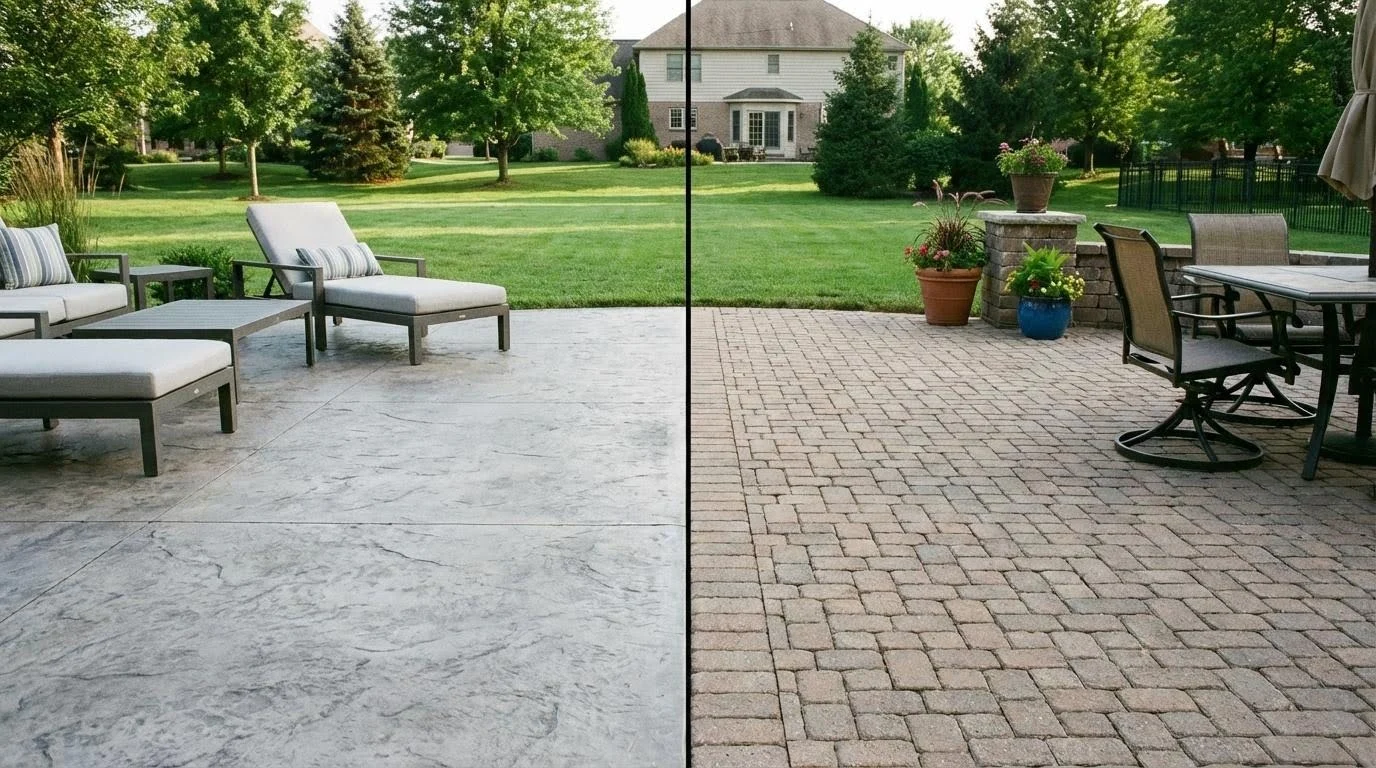
A standard poured concrete patio in Indianapolis costs between $8 and $18 per square foot installed, depending on finish type. Brush finish sits at the low end. Stamped concrete with integral color falls at the higher end. A 300-square-foot patio in standard brush finish typically runs $2,400 to $3,600.
Paver patios in the Indianapolis market generally cost $15 to $30 per square foot installed. That same 300-square-foot patio in mid-grade pavers runs $4,500 to $9,000. The price gap comes from labor: each paver is placed individually on a screeded sand bed, which takes significantly more time than pouring and finishing a single slab.
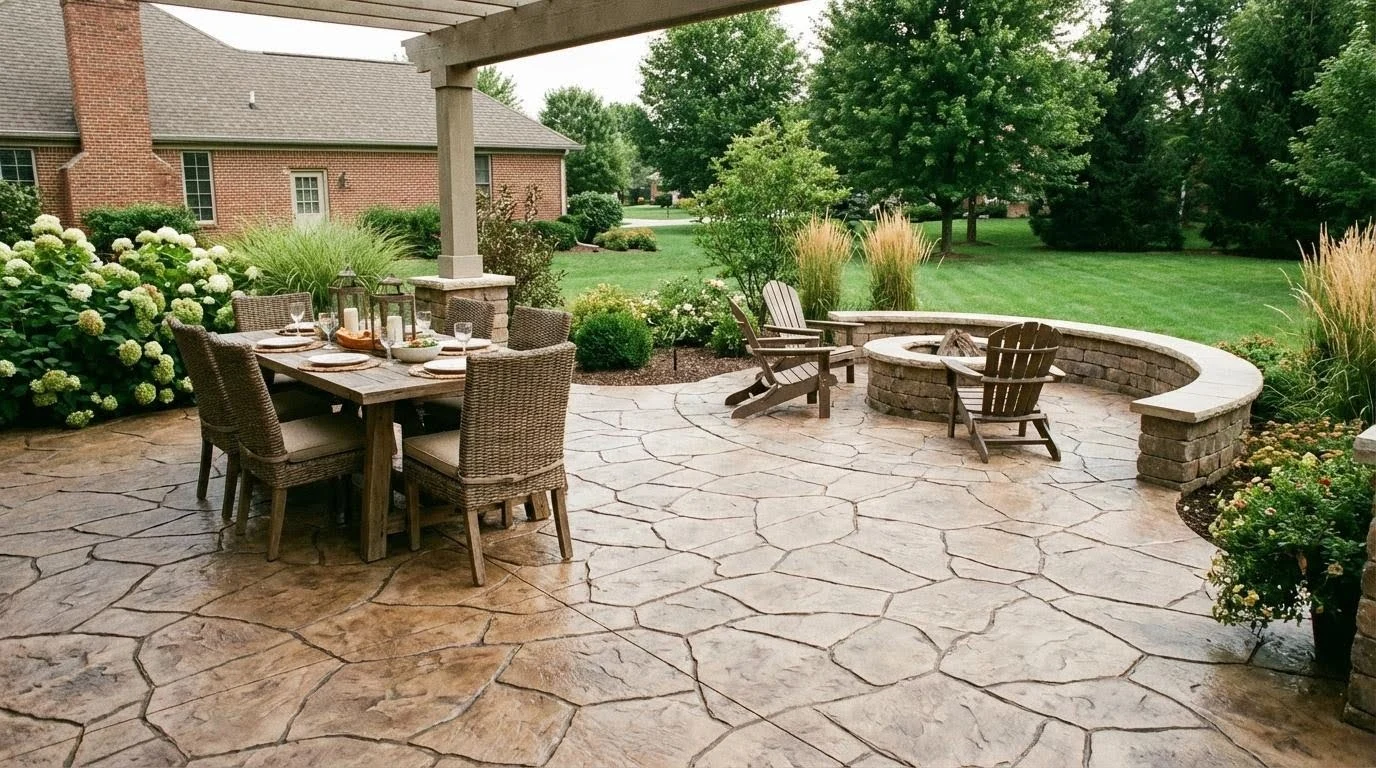
Stamped concrete closes the visual gap considerably. A stamped patio mimics the look of pavers, flagstone, or brick at roughly 40 to 60 percent of the paver installation cost. For homeowners who want the paver aesthetic without the paver price, stamped concrete is the most common middle ground in this market.
Durability and Maintenance in Indiana’s Climate
Indianapolis gets roughly 42 inches of rain per year and around 25 inches of snow. Both materials handle moisture, but they manage it differently.
Poured concrete is a continuous slab. Water runs off the surface and drains at the edges. The main vulnerability is cracking from freeze-thaw cycles. Properly poured concrete with control joints placed every 8 to 10 feet manages this by directing cracks to predetermined locations where they’re barely visible. Minor hairline cracks along control joints are normal and don’t affect structural performance.
Pavers handle freeze-thaw differently. Each unit can shift independently, which means individual pavers rarely crack. However, the sand joints between pavers erode over time and need re-sanding every two to three years. Weed growth between joints is a constant maintenance item in Indiana’s growing season. Polymeric sand reduces this, but doesn’t eliminate it entirely. For a deeper comparison, see our side-by-side breakdown of stamped concrete versus pavers.
Design Flexibility and Long-Term Value
Pavers offer modular design flexibility. You can mix colors, create borders, and replace individual units if one cracks or stains. That modularity appeals to homeowners who want intricate geometric patterns or the ability to pull up sections for utility access.
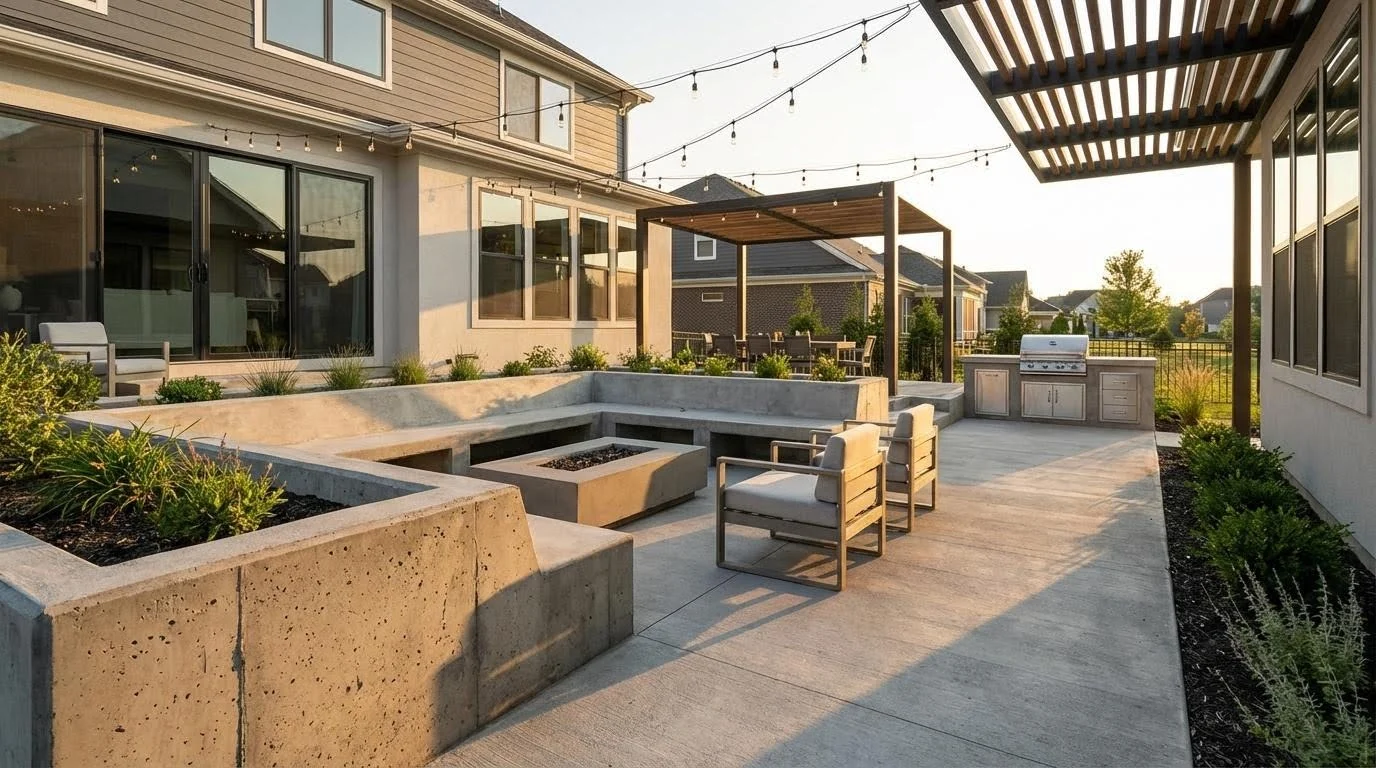
Concrete offers a different kind of flexibility. Stamped patterns, exposed aggregate finishes, and integral color can replicate dozens of natural materials at a fraction of their cost. Concrete also supports built-in features like seating walls, fire pit bases, and integrated steps that are difficult to execute with pavers. Central Indiana homeowners often choose concrete when the patio design includes elevation changes or curved edges, since forming concrete to custom shapes costs less than cutting pavers to fit.
From a resale perspective, both materials add value. Real estate agents in the Carmel and Fishers markets report that well-maintained patios of either material are a selling point. The deciding factor at resale is usually condition, not material type.
Frequently Asked Questions
Do concrete patios crack more than paver patios in Indianapolis?
Concrete patios develop hairline cracks along control joints (intentionally placed to accommodate natural movement). These cracks are cosmetic, not structural. Pavers rarely crack individually, but the joints between them erode and shift over time. Mattingly Concrete places control joints every 8 to 10 feet to keep cracking predictable and inconspicuous.
Can I add stamped concrete to an existing patio?
Stamping must be done during the initial pour while the concrete is still workable. Existing slabs can’t be stamped after curing. However, concrete overlays with stampable material can sometimes be applied over sound existing slabs, though adhesion depends on the condition and preparation of the original surface.
Which patio material is better for a fire pit area?
Concrete performs well around fire pits because it provides a continuous, level surface that handles radiant heat without shifting. Pavers near fire pits can settle unevenly as the sand base dries out from heat exposure, requiring more frequent releveling. For built-in fire pit designs, poured concrete integrates the pit base and surrounding surface into a single structure.
Choose the Right Surface for Your Backyard
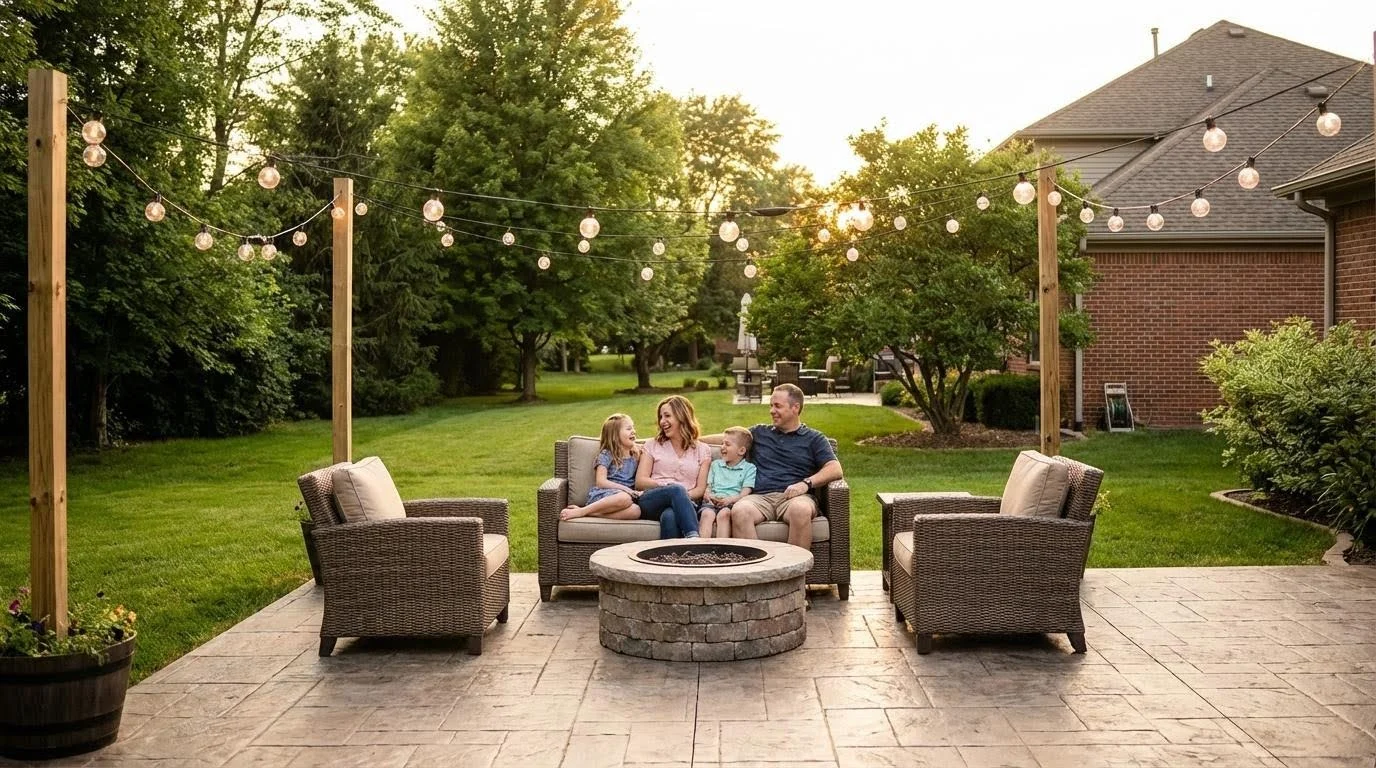
If low maintenance and lower upfront cost are priorities, poured concrete is the stronger choice. If individual-unit replacement and modular patterns matter more to you, pavers offer that flexibility at a higher price point. Stamped concrete splits the difference for homeowners who want the paver look without the joint maintenance.
Schedule a free patio consultation with Mattingly Concrete. A project coordinator will visit your property, discuss both options in detail, and provide a quote tailored to your layout, finish preferences, and budget.