The best sealer for a concrete patio in Indiana is a penetrating silane or siloxane product that blocks moisture without changing the surface appearance. Penetrating sealers outperform acrylics in freeze-thaw climates because they work inside the concrete rather than forming a film on top. Mattingly Concrete Inc. seals residential concrete patios and outdoor living areas across Central Indiana with water-based, low-VOC products.
A Noblesville homeowner called last fall after their stamped patio started flaking along the stamp lines. The slab wasn’t defective. Two Indiana winters without a sealer had let moisture into the surface, while freeze-thaw cycling pulled the top layer apart. Which sealer type prevents that damage, and when should it go on? The right product depends on the patio’s finish, and the right timing depends on Indiana’s seasons.
Why Indiana Weather Demands the Right Sealer

Indiana’s freeze-thaw cycle is the single biggest threat to unprotected patio concrete. Water soaks into the porous surface, freezes overnight, and expands by roughly 9% of its volume. That expansion fractures the top layer from the inside out. For concrete patios near Carmel and Fishers, Central Indiana’s 80 to 100 annual freeze-thaw cycles mean this process repeats dozens of times each winter. A sealer that blocks water entry before the first hard freeze prevents spalling, flaking, and surface pitting. Without one, even a properly poured slab can show visible damage within two to three winters.
Penetrating Sealers for Freeze-Thaw Protection

Silane and siloxane sealers absorb into the concrete pore structure and form a hydrophobic barrier below the surface. Water beads on contact instead of soaking in. Because the barrier is internal, the sealer does not change the patio’s color or sheen. Most penetrating sealers cost $40 to $80 per gallon and cover 150 to 300 square feet per gallon. These products last five to ten years per application in Indiana conditions and require no stripping before recoating.
Acrylic and Film-Forming Sealers

Acrylic sealers sit on the concrete surface and form a visible film that adds a subtle sheen or wet look. They cost $25 to $60 per gallon but wear off in one to three years and can peel, bubble, or turn white when moisture gets trapped beneath the film during freeze-thaw. Recoating requires stripping the old layer first, which adds labor and cost. Acrylic sealers work better in covered or sheltered patio areas where direct rain and freeze exposure are limited. For patios that receive heavy foot traffic and chemical exposure, weather-resistant concrete coatings for patios are worth considering because they’re more durable than topical sealers.
When and How to Apply Patio Sealer
The best time to seal concrete is in early spring when overnight lows are consistently above 50°F, typically late April through May. Daytime temperatures should stay between 50°F and 80°F, with no rain in the forecast for 24 hours after application. New concrete needs at least 30 days of cure time before the first coat. Early fall is the second-best window, giving the sealer time to cure before the first freeze.
Professional sealer application runs $1.50 to $3.00 per square foot for a standard residential patio. Mattingly Concrete recommends resealing annually before winter to protect the surface ahead of Indiana’s freeze-thaw cycles. DIY application costs $0.50 to $1.50 per square foot in materials, but uneven coverage can leave sections exposed to moisture.
Frequently Asked Questions
How Often Should You Reseal a Concrete Patio in Indiana?
Concrete patios in Indiana should be resealed annually before the first hard freeze, which is the cadence Mattingly Concrete recommends. Penetrating sealers carry a longer chemical lifespan on paper, but Indiana’s freeze-thaw cycles and surface wear on textured finishes make a fall reapplication the safer call.
Can You Apply Sealer to a Wet Concrete Patio?
Sealer should not be applied to a wet patio because moisture trapped beneath the coating prevents proper adhesion. The surface needs to be dry for at least 24 hours after the last rainfall before application.
Is Penetrating Sealer Better Than Acrylic for Patios?
Penetrating sealer is the better choice for outdoor patios in Indiana because it handles freeze-thaw cycling without peeling or turning white. Acrylic film sealers trap moisture beneath the surface, which expands during freezing and damages the coating.
Protect Your Patio Before Winter
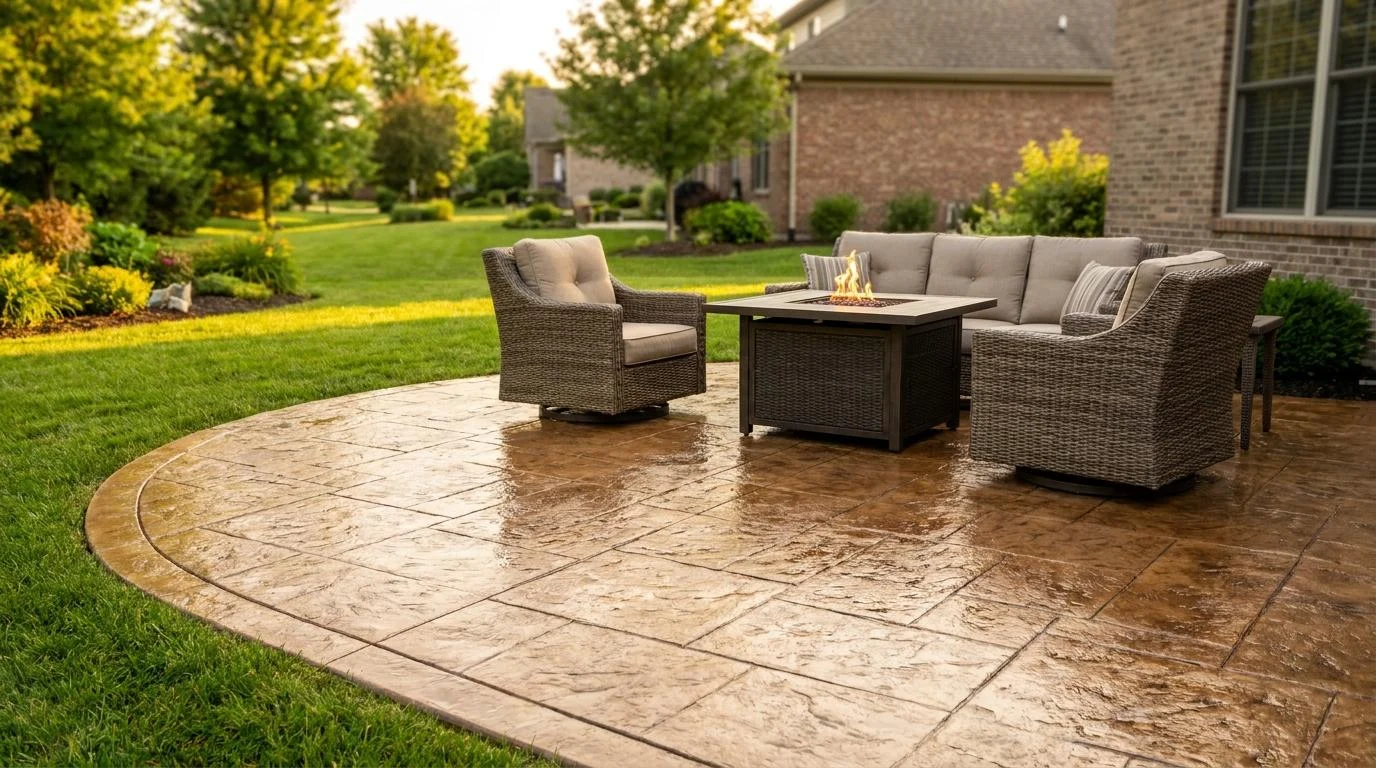
A patio that flakes after two winters and one that still looks good ten years later often come down to one thing: whether it got sealed that first year. Skip it, and Indiana’s freeze-thaw does its damage from the inside out. Stay on top of it with a penetrating silane or siloxane sealer, and water beads off instead of soaking in and cracking the surface come January.
But the product is only half of it. How it’s applied matters just as much. Seal too late in the season or miss a few spots, and that’s exactly where the flaking starts. If you’d rather not gamble on it, Mattingly Concrete can handle the product and the timing for you. Call (317) 867-4049 or reach out through the contact and free estimate page.