
Your driveway is one of the largest surfaces on your property and one of the first things people notice about your home. If you’re building new or replacing an aging surface, you’ve probably found yourself asking the same question thousands of Indiana and Greater Midwest homeowners ask every year: “Concrete vs asphalt driveway: which one is actually worth the money?”
At Mattingly Concrete, we’ve been building beautiful and lasting concrete solutions for years. We specialize in Residential driveways and new construction, and we’ve helped homeowners across Indianapolis and the Greater Midwest make this exact decision. This guide breaks down the real differences, not just the upfront price tag, but the total cost of ownership over the life of your driveway.
Cost Comparison: Upfront Price vs. Lifetime Value

The most common starting point in the concrete vs asphalt driveway debate is cost. Asphalt is cheaper to install, but that lower price comes with a catch. Here’s what homeowners in the Indianapolis and Greater Midwest markets can expect to pay in 2026:
| Factor | Asphalt | Concrete |
|---|---|---|
| Installation Cost (per sq. ft.) | $7 – $13 | $12 – $18 |
| 600 Sq. Ft. Driveway | $4,200 – $7,800 | $7,200 – $10,800 |
| Average Lifespan | 15 – 20 years | 30 – 40+ years |
| Maintenance Frequency | Seal coat every 2–3 years | Seal every 3–5 years |
| Typical Maintenance Cost | $200 – $400 per seal coat | Minimal — sealing only |
| Estimated 30-Year Cost | $12,000 – $18,000+ | $8,000 – $12,000 |
When you factor in the cost of repeated seal coating, crack repairs, and at least one full replacement over a 30-year period, concrete is often the more affordable option over time. As we explored in our guide on how thick should a concrete driveway be, investing in the right slab thickness from day one dramatically extends the lifespan and reduces long-term costs.
Durability in Indiana and the Greater Midwest’s Harsh Winters
Climate is a critical factor in the concrete vs asphalt driveway comparison, and it’s where the Midwest throws a curveball. Indiana and the Greater Midwest experience brutal freeze-thaw cycles — temperatures can swing between freezing and above-freezing multiple times in a single week.
How Asphalt Handles the Cold
Asphalt is flexible, which helps it absorb minor ground movement. However, it softens in extreme summer heat and requires frequent seal coating to prevent water penetration. Over time, the surface develops ruts, potholes, and alligator cracking that demand constant attention.
How Concrete Handles the Cold
A properly installed concrete driveway with adequate thickness, air-entrained mix, and professional finishing is built to withstand decades of freeze-thaw cycles. The key is the quality of the installation, from subgrade compaction to proper joint spacing. This is the same level of engineering precision we apply to our commercial sidewalks and concrete pavement projects across the region.
We always recommend inspecting your concrete driveway for winter damage each spring. Catching small issues early prevents them from becoming expensive structural problems later.
Maintenance: Set It and (Almost) Forget It
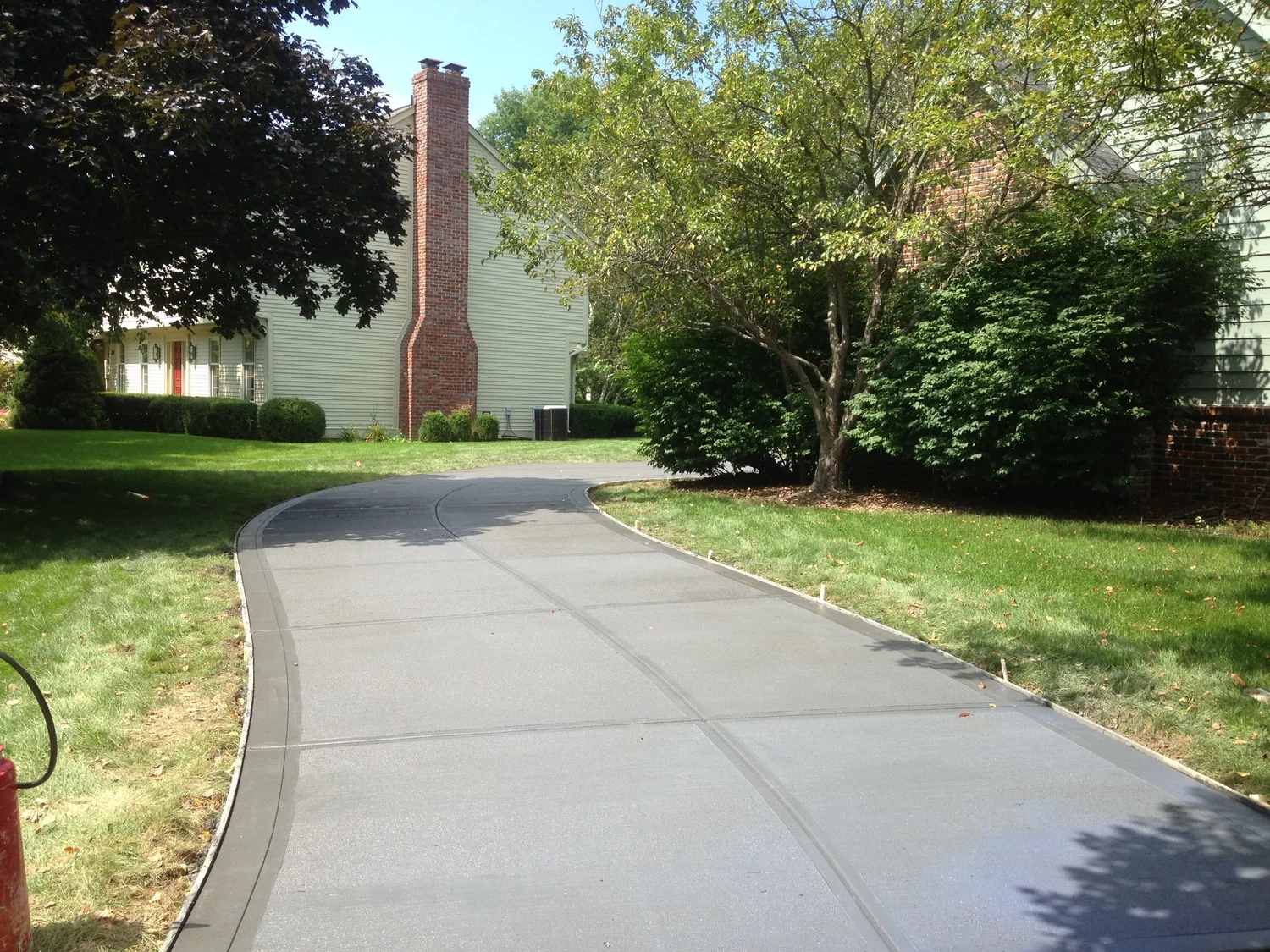
One of the biggest advantages in the concrete vs asphalt driveway showdown is maintenance. Asphalt requires seal coating every 2 to 3 years, and even with regular maintenance, it typically needs a full replacement within 15 to 20 years. Those seal coat visits add up to thousands of dollars over the driveway’s life.
Concrete, on the other hand, requires only periodic sealing every three to five years and routine cleaning. If a hairline crack does appear, our step-by-step guide to repair cracks shows how a quick fix prevents water intrusion and keeps your slab structurally sound for years to come.
For homeowners who want to maximize protection on decorative surfaces, applying the best concrete coating for patio and driveway adds an extra layer of defense against UV rays, moisture, and staining.
Concrete Curbs Appeal and Home Value
When it comes to appearance, concrete wins decisively. While asphalt offers one look, flat black, concrete opens the door to stamped patterns, integral color, exposed aggregate, and polished finishes. If you’re curious about decorative options, our guide on stamped concrete patio cost covers what to expect for custom designs.
Real estate professionals consistently report that a concrete driveway adds $5,000 to $10,000 in perceived home value compared to asphalt. That’s not just curb appeal, it’s a measurable return on your investment. A clean, well-maintained concrete driveway paired with matching Residential sidewalks and Steps creates a cohesive, high-end look that buyers notice immediately.
The Verdict: Why Concrete Is the Smarter Long-Term Investment
When you compare concrete vs. asphalt driveways side by side on cost over 30 years, maintenance demands, weather resilience, design options, and resale value, concrete comes out ahead in nearly every category. The only scenario where asphalt makes sense is if you’re on a tight, short-term budget and plan to sell within five years.
For homeowners who plan to stay in their home, invest in their property’s value, and avoid the hassle of constant maintenance, a professionally installed concrete driveway is the clear winner. At Mattingly Concrete, we bring the same level of expertise to your Residential driveway as to our Government and Commercial infrastructure projects, because every slab we pour bears our name.
Get a Free Driveway Estimate Today
Stop guessing and start planning. Whether you’re replacing an old asphalt surface or building from scratch, Mattingly Concrete provides detailed, transparent estimates with no pressure and no hidden fees. Serving Indianapolis and the surrounding Greater Midwest area since 1987, we’ll help you build a driveway that lasts a lifetime.
Ready to see why thousands of Midwest homeowners choose concrete? Contact Mattingly Concrete today for your free driveway consultation, and let’s build something that lasts.